

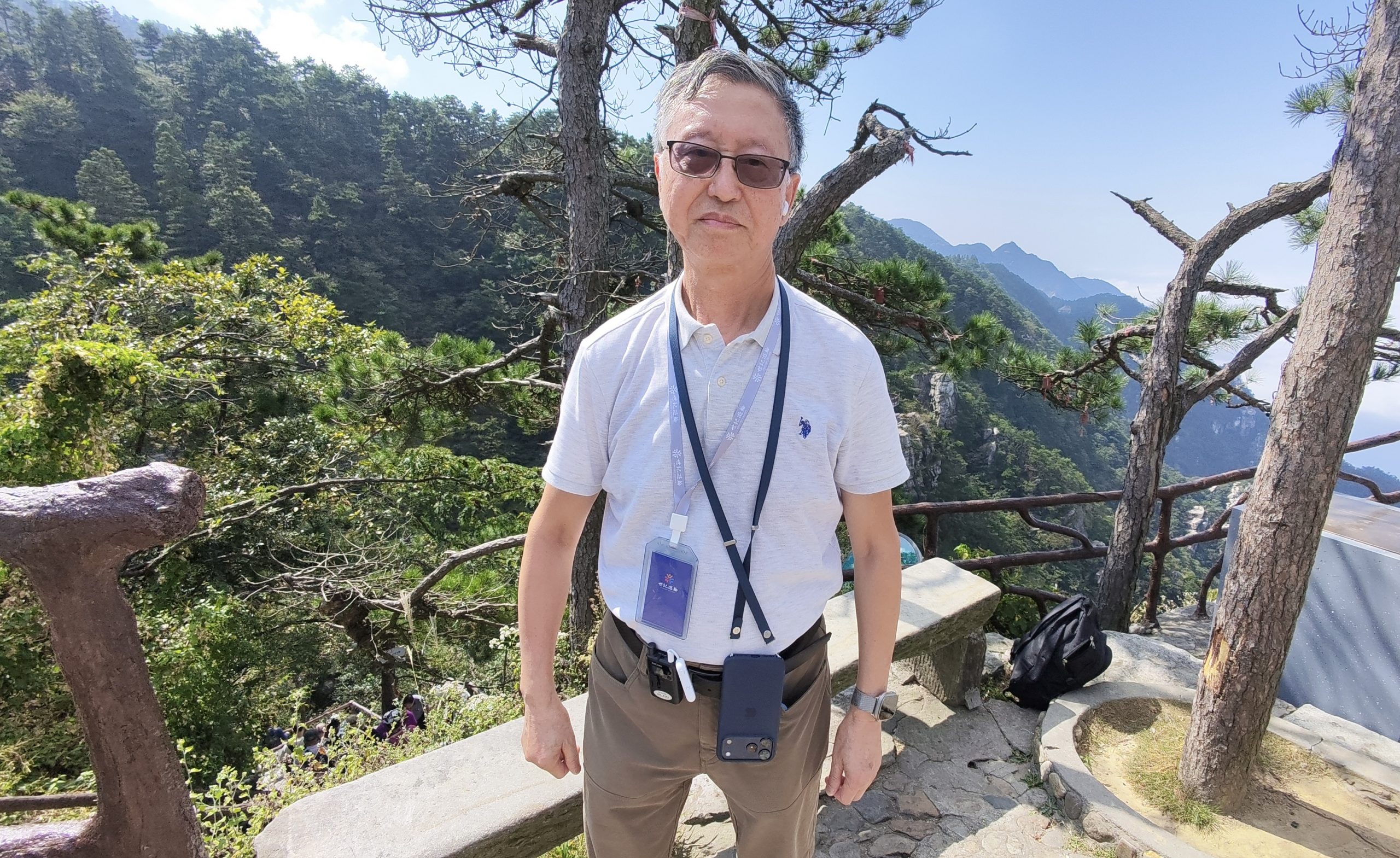
On the seventh day of our Century Legend Yangtze River cruise, Rosa and I joined a shore excursion to one of China’s most celebrated landmarks — Lushan Mountain. Rising majestically in Jiangxi Province, Lushan has inspired poets, painters, and philosophers for more than a thousand years. For me, what drew me most to this mountain were not just its misty peaks or tumbling waterfalls, but three poems that have lived in my memory for decades.
The first came from Su Shi, the great poet of the Song Dynasty, who once asked,
“Why can’t I tell the true shape of Lu-shan?
Because I myself am in the mountain.”
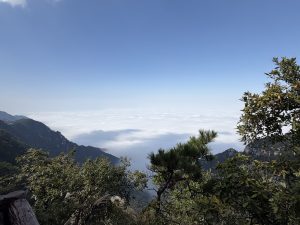
These lines have always fascinated me — a reminder that perspective changes everything. As our bus wound up the narrow mountain roads and we entered the sea of clouds, I finally understood Su Shi’s meaning: when you are inside the grandeur of Lushan, it becomes impossible to grasp its full form. You are simply part of its vastness.
The second poem was one that has stayed with me since fifth grade, when I first learned it by heart in elementary school — Li Bai’s “Viewing the Waterfall at Mount Lu.”
“Sunlight illuminates Incense Burner Peak, kindling violet smoke;
From afar, a waterfall hangs before the river.
Water flies straight down three thousand feet—
Has the silver stream of our galaxy plunged from highest heaven?”
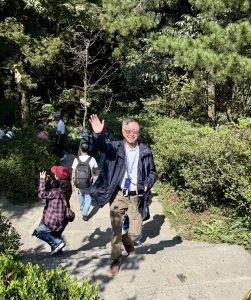
Standing at the scenic overlook, I recited these lines softly as we gazed at the same waterfall that had inspired Li Bai more than a millennium ago. The white torrent descended through clouds, just as he had described — like the Milky Way tumbling from the heavens. For a moment, time dissolved, and I felt a boyhood dream come full circle.
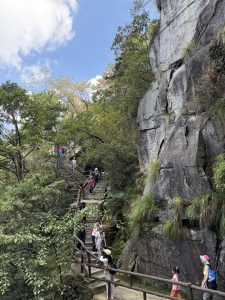
The third poem that lured me here was by Mao Zedong, written more than a thousand years after Li Bai:
“Amid the growing shades of dusk stand sturdy pines,
Riotous clouds sweep past, swift and tranquil.
Nature has excelled herself in the Fairy Cave,
On perilous peaks dwells beauty in her infinite variety.”
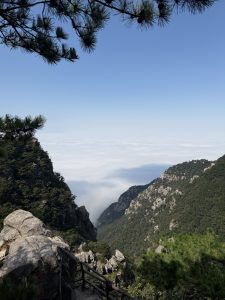
Mao’s words brought me to the Fairy Cave, a steep climb through stone steps and swirling mists. As I ascended, each turn revealed new scenes — pine trees clinging to cliffs, streams whispering below, and clouds curling around distant peaks. Nature truly had “excelled herself.”
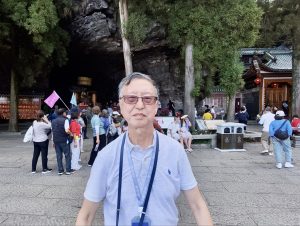
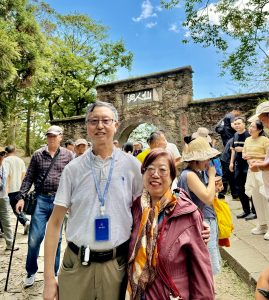
But Lushan is more than poetry — it is also a mountain of power and politics. Both Mao Zedong and Chiang Kai-shek, the two most influential leaders in modern Chinese history, once made their mark here. We visited Meilu Villa, once the summer retreat of Chiang Kai-shek and his wife Soong Mei-ling, later used by Mao himself. The contrast was striking: a quiet European-style villa nestled among green pines, yet filled with the echoes of history’s storms.
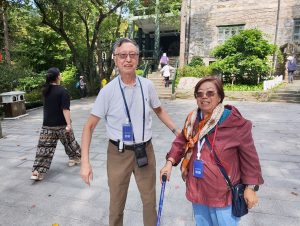
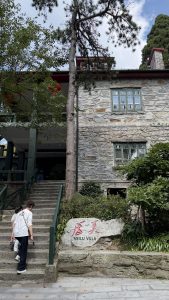
As Rosa and I stood on the balcony overlooking the hazy valley, I thought about the strange coexistence of beauty and history that defines Lushan. It is a place where poets sought truth, and leaders sought power — where clouds have witnessed both dreams and decisions that shaped a nation.
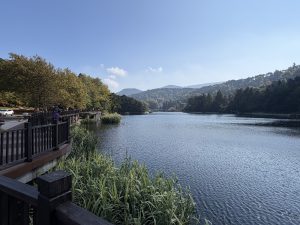
By the time we descended from the Fairy Cave, the mountain was wrapped in a gentle evening mist. I turned for one last look, realizing that Su Shi was right — I still could not see the true shape of Lushan. But perhaps that is the point: some truths can only be felt, not seen.