

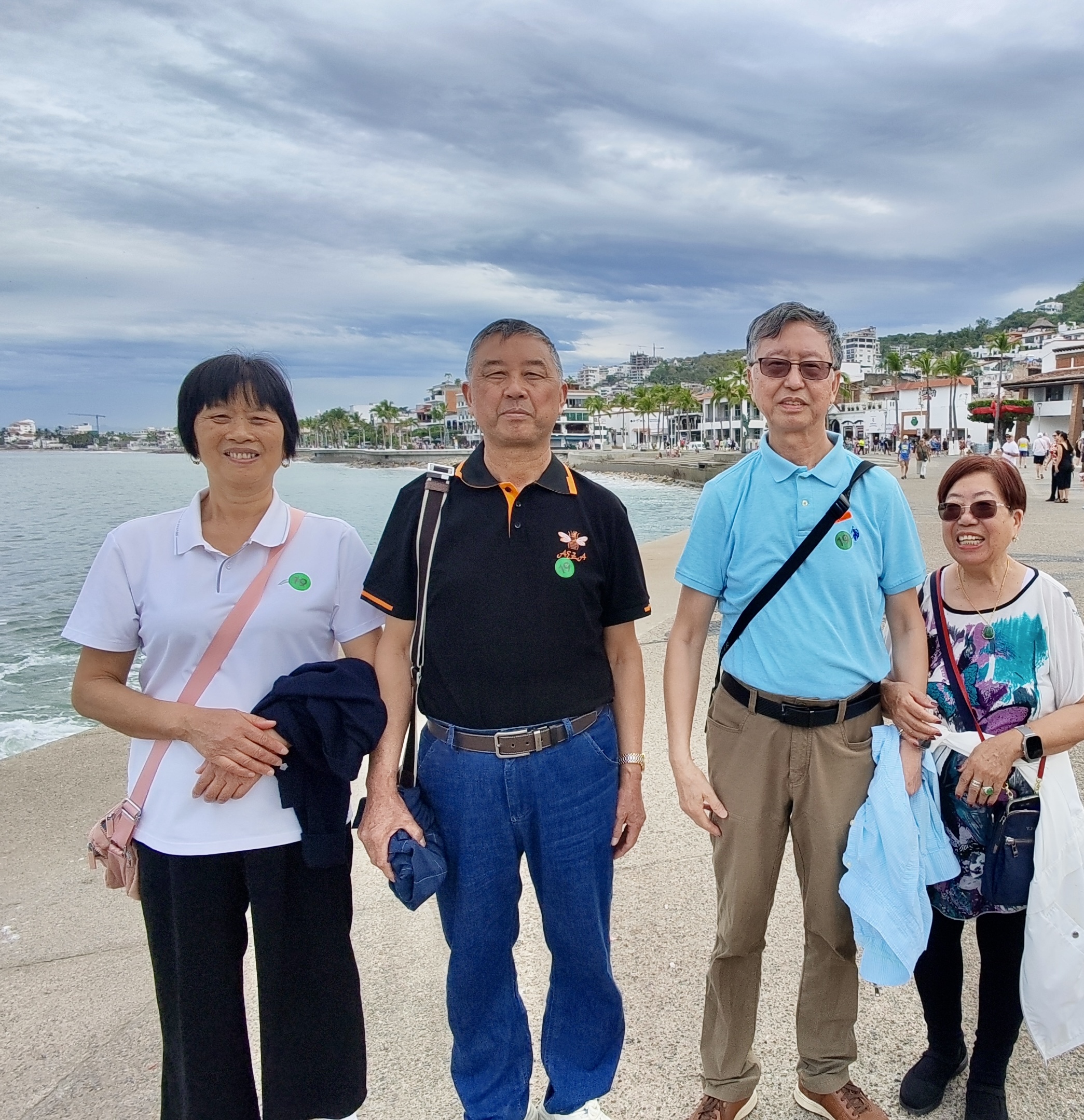
On a clear winter afternoon, Rosa and I stood with my brother Guangyi and his wife Lifang at the bustling port of Los Angeles, watching the great white ship that would be our home for the next seven days. The Navigator of the Seas, operated by Royal Caribbean International, rose above the harbor like a floating city, its decks layered with promise and possibility. For Guangyi, who had traveled all the way from China to visit me, this was his very first cruise. I could see the excitement in his eyes — the same excitement I myself had once felt years ago.
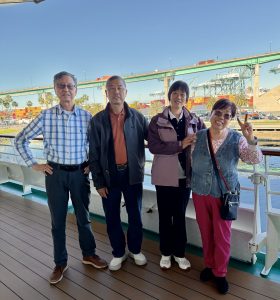
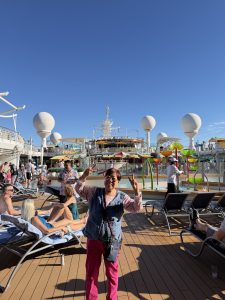
The cruise departed on January 16, leaving behind the familiar skyline of Southern California and carrying us southward into the open Pacific. As the coastline faded into the distance, a sense of freedom took its place. Guangyi and Lifang explored every corner of the ship with endless curiosity — the grand dining room with its glittering chandeliers, the open decks where the ocean stretched endlessly, and the quiet lounges where one could sit and watch the horizon. To them, everything was new, and their sense of wonder made the journey even more meaningful for Rosa and me.
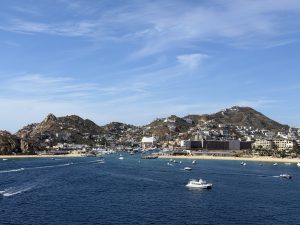
Our first destination was Cabo San Lucas, located at the southern tip of Mexico’s Baja Peninsula in the state of Baja California Sur. As the ship approached the port, the deep blue waters sparkled beneath the morning sun, and the rugged desert mountains formed a dramatic backdrop.
Cabo San Lucas has transformed over the decades from a quiet fishing village into one of Mexico’s most famous coastal destinations, yet it still retains its natural charm. The most iconic landmark is El Arco de Cabo San Lucas, a magnificent natural rock arch carved by centuries of wind and waves. Standing at the edge of the sea, it marks the meeting point of the Pacific Ocean and the Sea of Cortez.
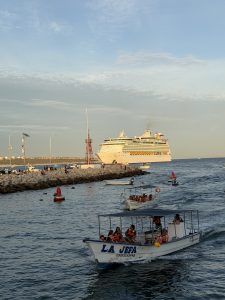
Beyond its natural beauty, Cabo’s old town offered colorful streets lined with small shops, cafés, and galleries. The buildings, painted in warm tones of yellow, orange, and red, reflected the vibrant spirit of Mexican culture. Guangyi and Lifang were fascinated by the relaxed pace of life. Street musicians played soft melodies, and the scent of grilled seafood drifted through the air. It was a place where time seemed to slow down, allowing visitors to simply enjoy the moment.
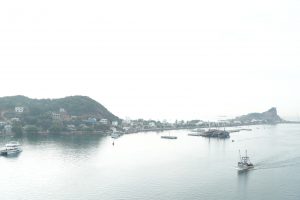
Our second port was Mazatlán, in the state of Sinaloa — a city with a rich history dating back nearly 500 years. Unlike Cabo San Lucas, Mazatlán has preserved much of its historical character. Its old town, known as Centro Histórico, is one of the best-preserved colonial districts on Mexico’s Pacific coast.
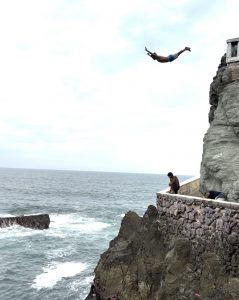
Cliff diving in Mazatlán is a, historic, and thrilling spectacle at Punta de Clavadistas (Divers Point), where locals plunge 45 feet into shallow, rocky water. Located near Olas Altas beach, this tradition features, daily,, performances from midday to late afternoon. As we watched the brave man climbed to the top of the cliff and jumped into the sea, our feeling turned from worry to respect. What a courageous show!
We walked along the famous Mazatlán Malecón, a seaside promenade stretching for miles along the ocean. It is one of the longest waterfront promenades in the world, offering stunning views of the sea on one side and the historic city on the other. Statues and monuments along the path told stories of Mazatlán’s past — from its indigenous roots to its era as a thriving 19th-century port.
In the heart of the old town stood the elegant Angela Peralta Theater, built in 1874 and named after one of Mexico’s most beloved opera singers. Its beautifully restored interior reflected the city’s cultural heritage and its long-standing love of music and the arts.
Mazatlán was once an important trading port connecting Mexico with Europe and Asia, and its prosperity during the 19th century left behind grand buildings and wide plazas. Walking through its streets felt like stepping into another era — one where the past remained alive.
Our final destination was Puerto Vallarta, located in the state of Jalisco along the beautiful Bay of Banderas. Of the three cities, Puerto Vallarta perhaps possessed the most romantic charm. The city is framed by the Sierra Madre mountains on one side and the vast Pacific Ocean on the other, creating a landscape of remarkable beauty.

Its old town, especially the district known as Zona Romántica, was filled with narrow cobblestone streets, whitewashed buildings, and balconies covered with flowers. The atmosphere was both peaceful and lively, blending tradition with modern life.
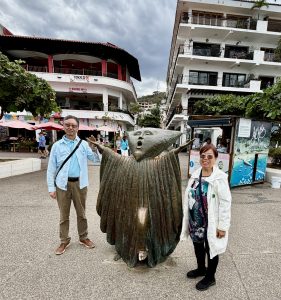
We walked along the Puerto Vallarta Malecón, where sculptures stood along the waterfront like silent storytellers. Artists, performers, and craftsmen gathered there, creating a vibrant cultural scene. The ocean breeze carried the sound of laughter and music, and Guangyi and Lifang could not stop taking photographs.
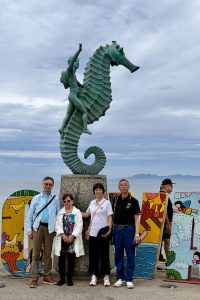
Dominating the skyline of the old town was the graceful Basilica of Our Lady of Guadalupe, its crowned tower rising above the city. Built in the early 20th century, the church remains the spiritual heart of Puerto Vallarta. Its presence symbolized the deep traditions and faith that have shaped the community for generations.
Puerto Vallarta itself was once a small fishing village, but it gained international recognition in the 1960s when the Hollywood film The Night of the Iguana was filmed there. Since then, it has grown into a beloved destination while still preserving its authentic character.
Throughout the journey, life aboard the ship was equally enjoyable. Each evening, we gathered for dinner, sharing stories and laughter. The theater presented performances every night. Guangyi often spoke about how different this experience was from anything he had known before. For him and Lifang, the cruise was not just a vacation but a discovery — of new places, new cultures, and new ways of seeing the world.

For Rosa and me, the greatest joy was not only the destinations but the opportunity to share this journey with family. Watching Guangyi experience his first cruise reminded me that travel is not only about seeing new places but also about creating memories together.

On January 23, when the ship returned to Los Angeles, the journey came to an end. Yet the memories remained vivid — the golden sunlight over Cabo’s arch, the historic streets of Mazatlán, the romantic charm of Puerto Vallarta, and the endless blue ocean connecting them all.
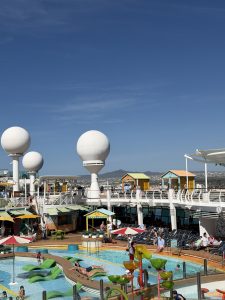
As we said goodbye to the ship, Guangyi smiled and said something simple but meaningful: this was a journey he would never forget.
And neither would we.